
Sultan Mehmed II
For over a thousand years, twenty-three armies had besieged Constantinople and none had succeeded. In 1453 a young Ottoman sultan gambled his entire empire on taking the city — and changed the course of history.
Ustadh Maheer Hasan
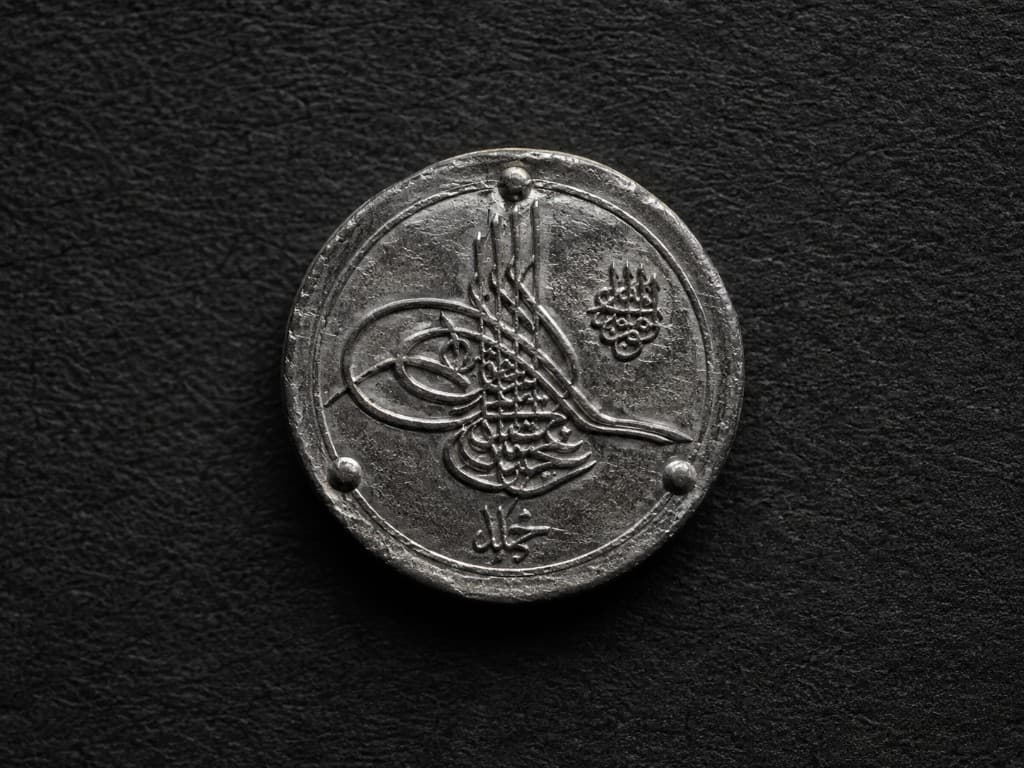
"If the world was one country, Constantinople would be its capital." Serving as the 'crossroads of the world', Constantinople was the jewel of the mighty Byzantine empire and had, since its birth, been the target of many empires and dynasties. For over a thousand years, 23 armies had besieged the grand city, but none succeeded. It was in 1453 that the remnants of the declining Byzantine Empire fell to the armies of Sultan Mehmed II's burgeoning Ottoman Empire.
Sultan Mehmed II was a man marked out for greatness from his childhood. Born on 30 March 1434, he was under the tutelage of Aqshams al-Dīn. He could speak seven languages, had memorised the Quran, and took a keen interest in history as well as being a skilled warrior and tactician. His father Murad II retired from the throne after securing the borders, leaving his 12-year-old son Mehmed II to rule the empire. However, as European powers sought to exploit the young ruler, Mehmed II requested assistance from his father, who initially refused. Mehmed then wrote to him, saying, "If you are the sultan, come and defend your lands; and if I am the sultan, then your sultan is ordering you to come and defend the lands." His father returned to the throne after defeating the European crusader armies at the Battle of Varna in November 1444.
Mehmed II regained the throne after his father's death in 1451. He immediately turned his attention westward towards the capital of the crumbling Byzantine Empire – Constantinople. Emissaries were sent to neighbouring kingdoms to negotiate truces whilst the Ottoman war machine was mobilised. An army of 80,000 men was raised, fortresses were constructed in key locations, and cannons were built, including the largest cannon ever built at that time – the Basilica, or Shahi. Everything was now ready for Mehmed II's march to Constantinople to end the centuries-long war his ancestors had fought. Mehmed II was gambling the future of his entire empire on this endeavour. Anything less than a victory at Constantinople would destroy the Ottoman Empire and lead to Mehmed II being dethroned.
On 6 April 1453, Mehmed II arrived outside the Theodosian walls of Constantinople. The Byzantines had begun preparing for this by calling on their European neighbours for aid. Among the few who answered was Giustiniani, who led a group of 7,000 mercenaries from Genoa. After taking up their positions, Sultan Mehmed II ordered the assault to begin. For days, the Ottoman cannons bombarded the Theodosian walls but failed to cause significant damage. Giustiniani and his mercenaries repelled every attack on the wall. For weeks, this went on. Sultan Mehmed II exhausted his resources, and now with rumours spreading about a crusader army arriving from Europe, the Sultan was running out of time. His grand vizier even advised him to negotiate a truce with the Byzantines. Mehmed needed to act fast and decisively if he wanted to save his empire, and he did just that.
One night, Mehmed II came up with a master plan that would etch his name into the annals of history. He ordered the trees in a nearby forest to be cut down, and the logs to be greased and placed down on the ground. The entire Ottoman navy was then dragged over these logs by hand and dropped into the Golden Horn, a small bay right outside the walls of Constantinople. Historians have praised this remarkable feat, stating, "Muhammad al-Faatih turned the earth into sea, and his ships crossed the top of the mountains instead of the ocean waves. Al-Faatih has exceeded Alexander the Great in this act." Constantinople was now completely surrounded from all sides. Still, the siege went on as the defenders put up fierce resistance. However, the Byzantines, out of food and out of hope, finally succumbed to the Ottoman army, and on 29 May, Sultan Mehmed II walked into Constantinople.
Days after the conquest, Mehmed II began to settle old accounts. He summoned his grand vizier, Candarli Halil Pasa, who had supposedly committed treason by taking bribes from the Byzantines. Although historians debate the truth of this claim, it was clear that the grand vizier had fallen out of favour with the young and ambitious Sultan due to the former's cautious approaches. In the mind of Mehmed II, a changing of the guard was needed and new ministers who shared Mehmed's ambitious vision had to be brought in. Candarli Halil Pasa could not simply be dismissed and exiled due to his support and influence in the Ottoman court and army. Therefore, he was executed and replaced with Mehmed's chief supporter at the siege of Constantinople, Zaganos Pasa.
Constantinople became the capital of the Ottoman Empire and was rebuilt not only to become an economic powerhouse but also a hub of education. It swiftly rose to become one of the most populated cities in the world, rivalling the glory days of Baghdad under the Abbasid Caliphate. Sultan Mehmed II continued to expand his realm into Central Europe and even into Italy until his death in 1481. It was through his efforts and the relentless efforts of his sons and grandsons that Islam reached the depths of Western Europe.
References
- The History of Muhammad al-Faatih — Yelmaz Azantu
- Sultan Muhammad Al-Fatih — Dr. Muhammad Ali Al-Salaabi
- Lost Islamic History — Firas AlKhateeb